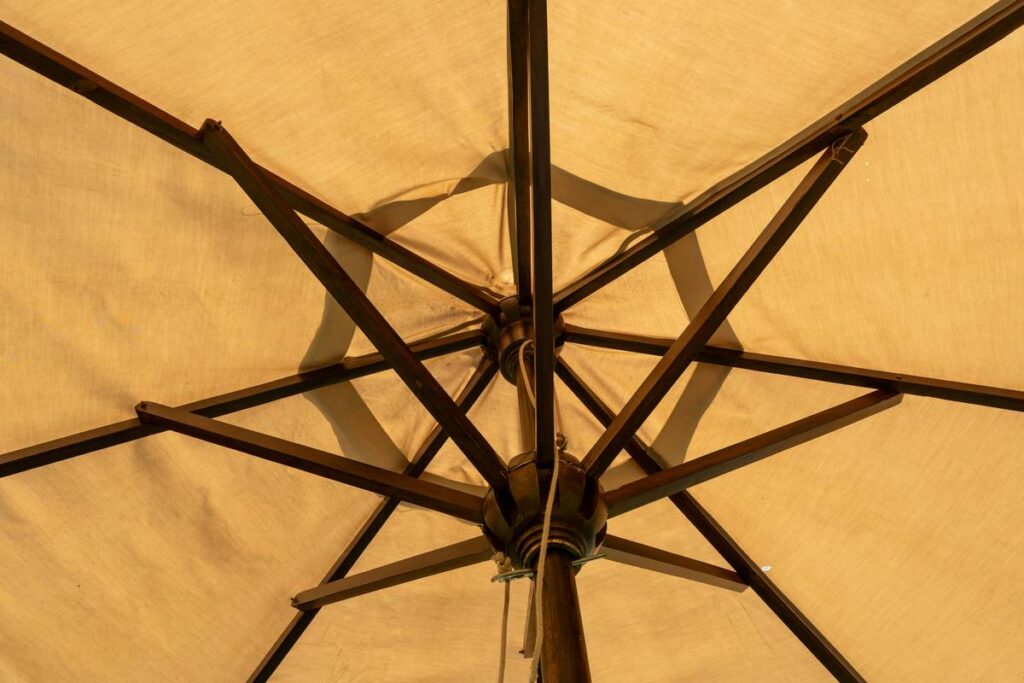
Your patio bakes under midday sun. Guests squint, furniture fades, and that “relaxing” afternoon turns into a sweaty endurance test. You bought an umbrella—maybe even two—but the wind flips it inside out or it blocks your view entirely. The fix isn’t just buying shade—it’s choosing outdoor parasols for your garden space that actually work where you live.
Why Most Garden Parasols Fail Within a Season
Generic big-box store parasols look great in photos. Reality? Flimsy frames crack after one gust. Cheap canopies bleach to pale ghosts by August. And worst—they’re bolted to flimsy bases that tip like dominoes. Most homeowners treat parasols as decor first, engineering second. That’s backwards. A parasol is a piece of functional architecture. Ignore physics, and you’ll spend every summer wrestling with frustration.
Choosing & Installing Outdoor Parasols for Your Garden Space
Picking right means matching hardware to your microclimate—not your neighbor’s Instagram feed.
Frame Material Matters More Than Color
Aluminum resists rust but bends. Wood looks classic but needs quarterly oiling. Fiberglass flexes in wind but won’t dent. If you live near salt air or snow, skip steel—it corrodes fast unless marine-grade.
Gusts Don’t Care About Your Canopy Print
High-wind zones demand vented canopies. Those dual-layer vents aren’t decorative—they equalize pressure so the sail doesn’t become a kite. Skip them, and you’ll chase your canopy down the street someday.
Bases Are Non-Negotiable
No table sleeve? Get a weighted base—minimum 45 lbs for a 9-ft parasol. Sand-filled resin bases beat concrete (won’t chip pavers). And never, ever rely on “sand bags” alone. They shift. Wind wins.
| Type | Best For | Min. Base Weight | Lifespan (Avg.) | Wind Rating |
|---|---|---|---|---|
| Cantilever (Offset) | Poolside seating, unobstructed views | 60 lbs | 5–7 years | Moderate (15–20 mph) |
| Center-Post | Dining sets, budget installs | 45 lbs | 3–5 years | Low (10–15 mph) |
| Market-Style w/ Tilt | Flexible angle control, small patios | 50 lbs | 4–6 years | Moderate-High (20+ mph w/ vent) |

The Industry Secret: Angle Beats Size Every Time
Retailers push bigger canopies—“more shade!” But here’s what designers won’t say: a smaller parasol tilted precisely delivers more usable shade than a massive flat one. Sun moves. At 10 a.m., you need east coverage; by 3 p.m., it’s west. Fixed-position giants leave half your lounge chair exposed. Go tilt-and-swivel—even if it costs 20% more. The math is simple: better coverage = fewer repositioning headaches. And fewer headaches = actual relaxation.
Frequently Asked Questions
Can I leave my garden parasol outside all year?
Only if it’s rated for UV/snow resistance—and even then, cover it. Uncovered parasols degrade 3x faster when exposed to winter moisture and summer UV. Store or cover during off-seasons.
How much wind can a quality parasol handle?
Well-built models with vented canopies withstand 20–25 mph gusts. Beyond that? Always lower and secure it. No parasol is hurricane-proof.
Are cantilever parasols worth the extra cost?
Yes—if you value open floor space and clean sightlines. They cost more upfront but eliminate center poles that block seating and foot traffic.