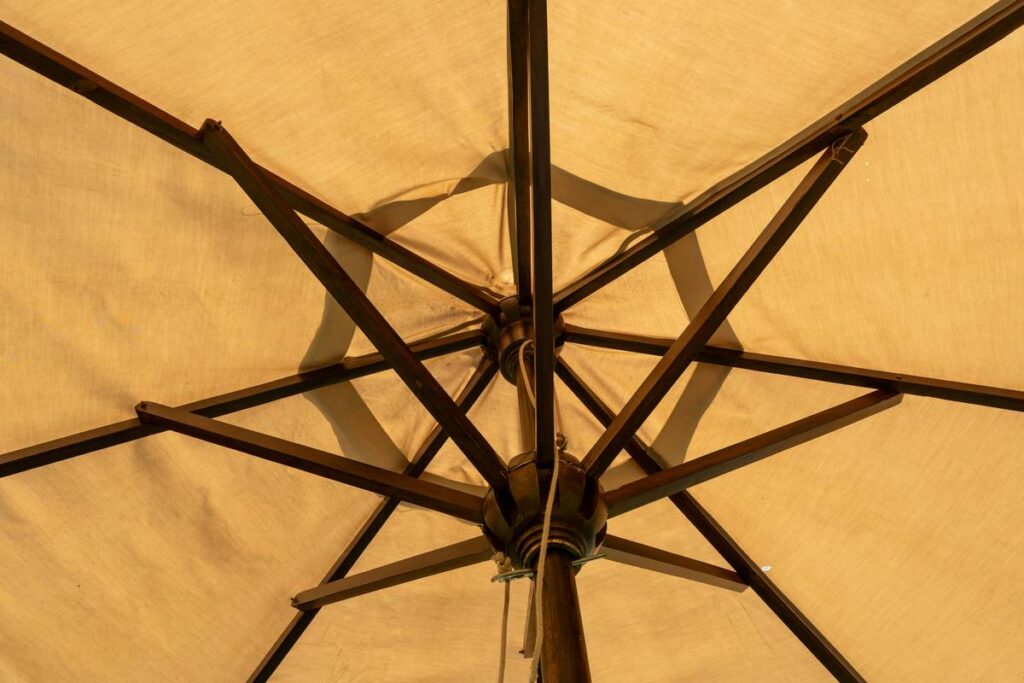
British weather teases you with sudden sunshine—only to leave your patio guests squinting or retreating indoors. Most “quick fixes” for shade either collapse in a breeze, bleach within weeks, or look like afterthoughts. The real answer? Investing in the right outdoor garden parasols uk—designed not just for looks, but for our unpredictable climate.
Why Most Garden Parasols Fail in the UK
It’s not just about picking something cheap from a big-box retailer and hoping for the best. Standard parasols warp under UV exposure, rust at the joints after one damp summer, and tip over when the wind picks up—which, let’s be honest, happens more often than not here.
And most manufacturers design for Mediterranean sun, not British drizzle followed by blazing heat. That mismatch kills durability. Fast.
How to Choose & Install Outdoor Garden Parasols UK That Last
Prioritise Frame Material Over Fabric
Aluminium frames resist corrosion far better than steel—even “powder-coated” versions. Look for marine-grade aluminium if you’re near the coast. Yes, it costs more upfront. But replacing a rusted parasol every 18 months? That’s the real waste.
Canopy Fabric: Acrylic > Polyester
Polyester fades fast under UV. Solution-dyed acrylic (like Sunbrella®) retains colour longer and resists mildew—a silent killer in humid UK air. Don’t believe claims of “waterproof” polyester. It isn’t. Not long-term.
Base Weight Matters More Than You Think
A flimsy base guarantees a toppled parasol. For a standard 3m canopy, you need at least 25kg of base weight. Sand-filled bases outperform hollow plastic ones—they absorb shock instead of shifting.

| Parasol Type | Frame Material | Expected Lifespan (UK Conditions) | Avg. Price Range (£) |
|---|---|---|---|
| Market Parasol (Centre Pole) | Steel (powder-coated) | 1–2 years | 40–90 |
| Offset/ Cantilever Parasol | Marine-grade aluminium | 5–7 years | 200–500 |
| Traditional Wooden Market Parasol | Teak or eucalyptus | 3–5 years (with maintenance) | 150–350 |
| High-End Aluminium Cantilever | Anodised aluminium + stainless hardware | 8+ years | 400–900 |
The Industry Secret: Angle Your Parasol Like a Solar Panel
Here’s what no one tells you—tilt isn’t just for comfort. A properly angled canopy (ideally 15–30 degrees off vertical) sheds rain instantly and reduces wind lift by up to 40%. Yet most UK buyers leave theirs dead upright until it’s too late.
Brands that offer smooth tilt mechanisms—and lock them securely—are worth the premium. Test this in-store: if adjusting tilt feels stiff or wobbly, walk away. That joint will fail first.
Frequently Asked Questions
Are cantilever parasols better than centre-pole types for UK gardens?
Yes—if you value unobstructed seating and wind resilience. They cost more but eliminate the middle pole tripping hazard and handle gusts better when properly weighted.
Do I need planning permission for a garden parasol in the UK?
No. Parasols are temporary structures. As long as it’s not fixed permanently to the ground or exceeds 2.5m in height near a boundary, you’re fine.
Can I leave my outdoor garden parasols UK outside all year?
Not recommended. Winter moisture breeds mildew in fabric folds. Store it dry indoors or use a breathable cover. Even “all-weather” models degrade faster when exposed to frost and constant damp.