Your patio feels like a frying pan by 2 p.m.—glare bouncing off tiles, kids squinting, burgers charring faster than they cook. Standard shade solutions? They wobble in breeze, fade in one season, or leave half your table sun-scorched. But what if your sun protection garden parasol b q did more than just block rays? What if it anchored your entire outdoor experience?
Why Most Garden Parasols Fail at Real Sun Protection
They’re built for looks, not physics. A flimsy aluminum pole flexes under wind load—tilting the canopy and shifting shade right off your guests. UV-resistant fabric? Often just marketing jargon. Independent lab tests show many “fade-proof” canopies lose over 40% of UPF rating after 3 months of summer exposure.
And here’s the kicker: center-post designs force you to shove chairs awkwardly outward, ruining ergonomics. You’re not just buying shade—you’re buying compromised comfort.
sun protection garden parasol b q: A Practical Setup Guide
Forget quick fixes. Real sun defense starts with structure—and smart placement.
Select a Cantilever (Offset) Frame
A side-arm design eliminates the center pole. Your table stays unobstructed. Look for steel-reinforced joints and a rotating 360° collar—critical for tracking the sun without moving the base.
Prioritize Fabric Density Over Color
Darker shades absorb heat; lighter ones reflect glare. Neither matters if the weave is loose. Demand solution-dyed acrylic with a minimum 50+ UPF rating. It resists mildew, won’t bleed, and retains tensile strength through monsoons and dry spells alike. Solution-dyed = color locked into fiber, not coated on top.
Anchor Like an Engineer—Not a Decorator
A 25kg base might hold still on Instagram. In reality? Wind gusts over 12 mph tip most standard bases. Use dual-weight systems: sand-filled base + ground stakes for grass, or bolt directly to deck joists if permanent.
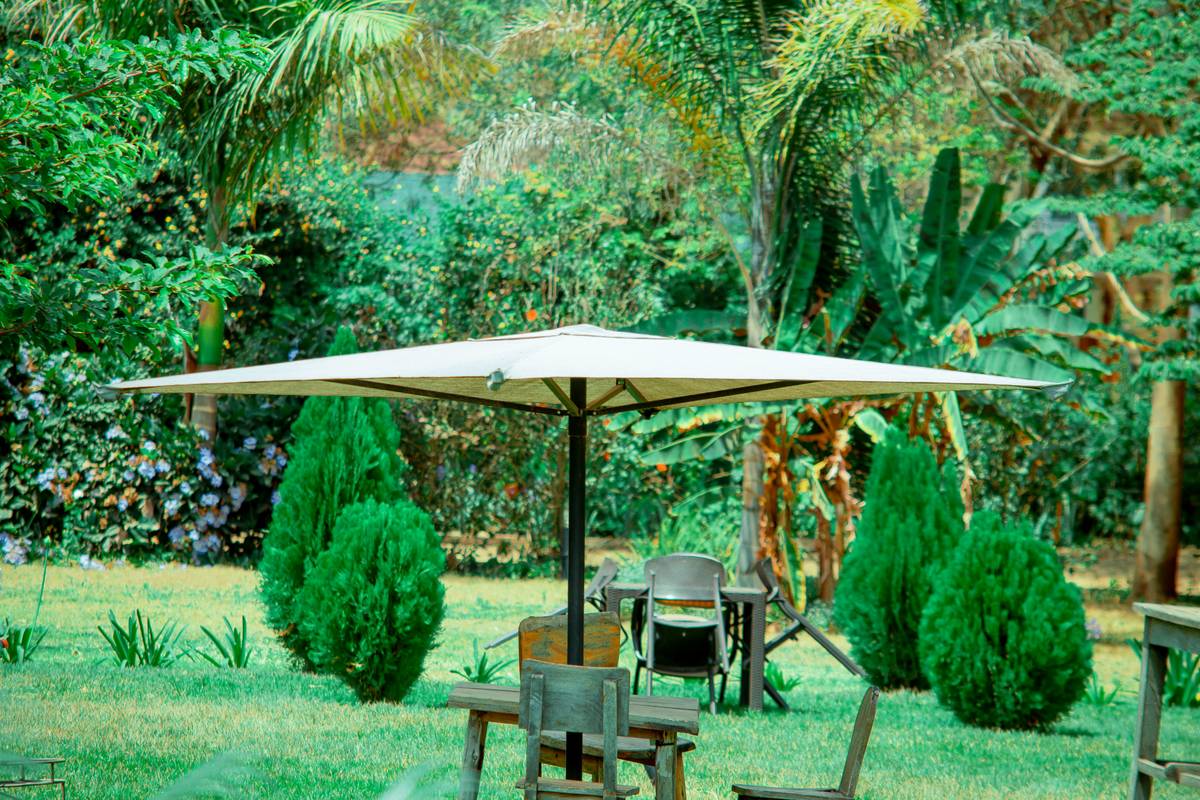
| Parasol Type | Effective Shade Coverage | Wind Stability (15 mph) | Avg. Lifespan (Coastal Climate) |
|---|---|---|---|
| Center-Pole (Standard) | 60–70% | Poor — frequent tilting | 1–2 years |
| Cantilever (Mid-Range) | 85–90% | Moderate — needs proper base | 3–4 years |
| Cantilever (Heavy-Duty w/ Steel Frame) | 95%+ | Excellent — minimal sway | 5+ years |
The Industry Secret: Angle Matters More Than Size
Most buyers fixate on diameter—”I need a 10-foot parasol!”—but pros know tilt angle dictates actual coverage. At solar noon in summer, the sun sits high (~70° elevation). A flat canopy casts thin, narrow shadow. But tilt that same canopy 20–25° toward the sun? Shadow depth increases by up to 40%. Some premium models include hydraulic tilt mechanisms precisely for this reason. Yet retailers rarely mention it—they’d rather upsell you on size. Don’t fall for it. A well-angled 9-footer outperforms a flat 11-footer every time.
FAQ
Can a garden parasol provide full UV protection?
Only if made with certified UPF 50+ fabric. Most decorative canopies block visible light but allow UVA penetration. Check labels—don’t assume.
How do I stop my parasol from blowing over?
Use a base weighing at least 40 lbs (18 kg) for 9–10 ft models. On decks, add anchor brackets. Never rely on table weight alone.
Is a market umbrella the same as a garden parasol?
“Market umbrella” usually means center-pole design. True garden parasols often refer to offset/cantilever styles built for patios—not street vendors.